Key benefits of attending
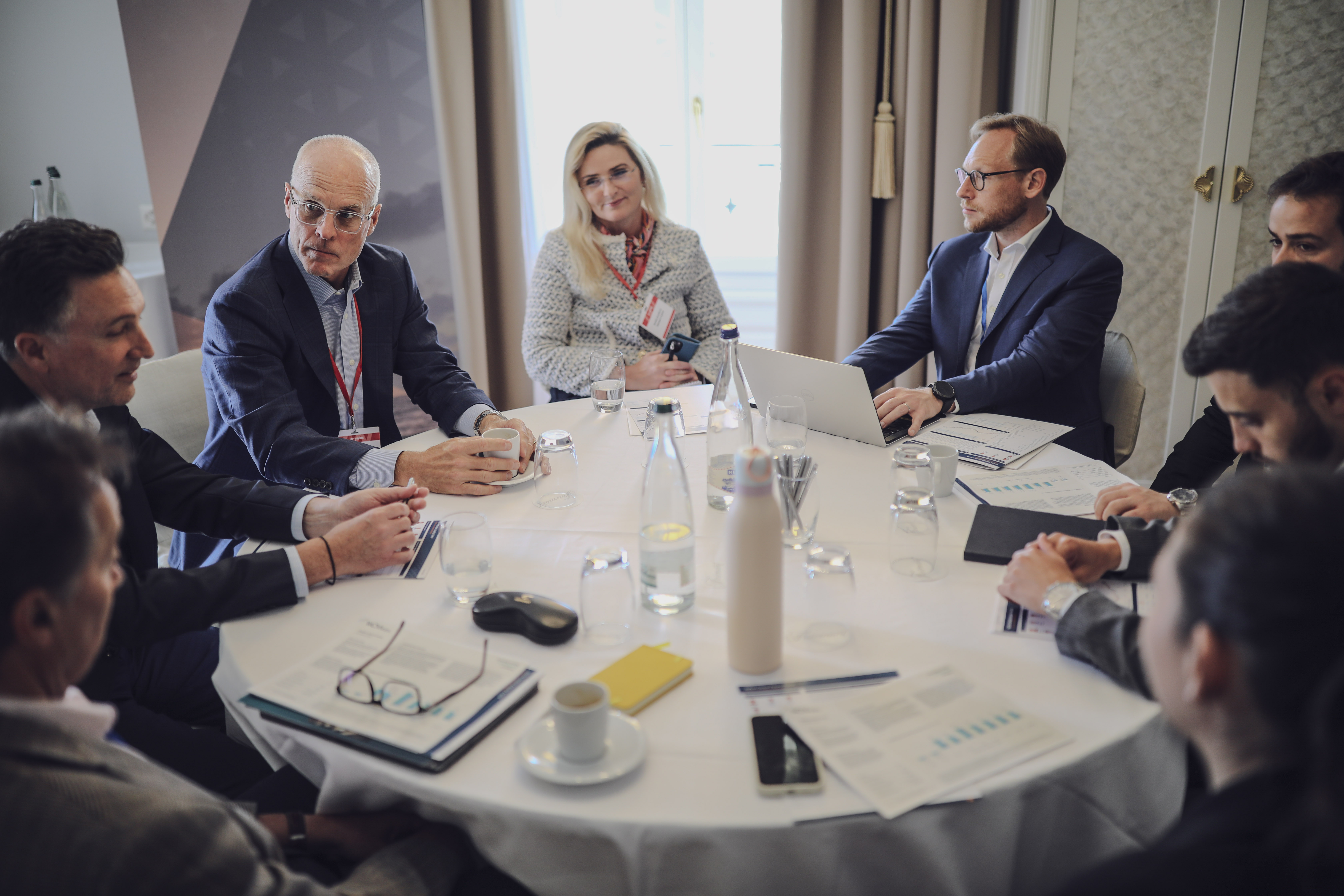
Tactical, intimate meetings
Gain market insights through direct conversations with leading fund managers.

Peer-to-peer networking
Connect with fellow fund selection leaders to exchange strategies and challenges.

Game-changing insights
Explore practical solutions for compliance, fees, tech adoption and portfolio design.
SPEAKERS
SELECTOR HARD TALK
Are We Investing in Cash Flows or Stories? Or both?
The Cognitive Dissonance Paradox: Finding Discipline in a Narrative-Driven Market
Markets have always been driven by earnings and policy, but today, something has changed. Investors find themselves in an era where narratives—AI, deglobalisation, and fiscal dominance—move trillions before the fundamentals even materialise. A recent poll of fund selectors (here the link Citywire Selector) reveals a striking 'civil war' in sentiment: 32% see 'Alarming Cognitive Dissonance,' believing we are all 'forced buyers' ignoring systemic fragility. Yet, another 32% argue there is no dissonance at all, claiming high valuations are simply the only logical response in a world with no better alternatives.
So crucial questions arise…
- Are we investing in cash flows, or in stories, or is the selectors' challenge finding the managers who can navigate both without losing discipline?
- When does a structural theme stop being a fundamental investment and start becoming a "crowded trade," and how do you challenge a manager whose conviction sounds like pure storytelling?
- How do you challenge managers enough when their conviction feels like a compelling story, but the fundamentals haven't yet materialized?
- How do you seek to distinguish between genuine "Alpha" and a storyteller who is very good at selling their strategy despite only average performance?
- How do you push a fund manager out of his/her comfort zone and push them past their rehearsed narrative?
- Have you ever been convinced by a fund manager who told you a good story and then regretted your decision afterwards? How often have you fallen for those stories?
- What should asset managers and portfolio managers bear in mind before meeting fund selectors to ensure their conviction doesn't just sound like storytelling?
- Michel Meert, Mercer
- Johanna Valta, Laicorn Asset Management
- Bart van de Ven, Ergo Sum Consulting
KEYNOTE SPEAKER - Thomas Demeester
AI Today, AGI Tomorrow: Lessons from the Past to Predict the Future
The evolution of Artificial Intelligence from narrow, task-specific systems to increasingly general and autonomous software represents a profound technological transformation. While Artificial Narrow Intelligence (ANI) has demonstrated remarkable real-world capabilities in natural language processing and decision support, it remains bound to specific domains without broader adaptability. Efforts to bridge this gap toward Artificial General Intelligence (AGI) encompass cognitive architectures, multi-agent reasoning, and neuro-symbolic systems. This progression represents a development continuum: moving from the established business presence of ANI, through the actively researched but unrealized domain of AGI, and ultimately toward the speculative horizon of Artificial Superintelligence (ASI). Although true AGI has not yet been achieved, rapid advances in neural networks (and along with it, in AI-oriented hardware) indicate the plausibility of scalable, general reasoning.*
With the global AI race in full swing, this session addresses crucial questions confronting long-term allocators.
- What are promising active areas of research? How will AI shape AI research itself, and how about the biomedical or legal domain?
- When building system-level agentic A I (networks of independent AI bots running entire business operations) can we trust modern AI to do it alone, or must we mix it with old-school, rule-based software to prevent costly mistakes?
- Can AI actually understand why things happen, or does it just look for patterns? Why does this matter? And how much risk does this create for the health sector or governance bodies?
Thomas Demeester, associate professor at the Internet Technology and Data Science Lab (IDLab) at Ghent University - imec, will tackle these questions, including potential opportunities and risks, from his own research perspective. After looking back at what happened over the past years in the area of natural language processing and what is going on today, he will engage the audience in thinking about what the AI-driven future could hold.
The session will be introduced by Rémi Laloum, Portfolio Manager - Discretionary Portfolio Management at BNP Paribas Wealth Management, and Michiel Meekers, Investment Analyst at Portolani.
*Synopsis adapted from "From ANI to AGI to ASI: A Comprehensive Review of Capabilities, Challenges, and Future Pathways
SPEAKERS
SELECTOR HARD TALK
Are We Investing in Cash Flows or Stories? Or both?
The Cognitive Dissonance Paradox: Finding Discipline in a Narrative-Driven Market
Markets have always been driven by earnings and policy, but today, something has changed. Investors find themselves in an era where narratives—AI, deglobalisation, and fiscal dominance—move trillions before the fundamentals even materialise. A recent poll of fund selectors (here the link Citywire Selector) reveals a striking 'civil war' in sentiment: 32% see 'Alarming Cognitive Dissonance,' believing we are all 'forced buyers' ignoring systemic fragility. Yet, another 32% argue there is no dissonance at all, claiming high valuations are simply the only logical response in a world with no better alternatives.
So crucial questions arise…
- Are we investing in cash flows, or in stories, or is the selectors' challenge finding the managers who can navigate both without losing discipline?
- When does a structural theme stop being a fundamental investment and start becoming a "crowded trade," and how do you challenge a manager whose conviction sounds like pure storytelling?
- How do you challenge managers enough when their conviction feels like a compelling story, but the fundamentals haven't yet materialized?
- How do you seek to distinguish between genuine "Alpha" and a storyteller who is very good at selling their strategy despite only average performance?
- How do you push a fund manager out of his/her comfort zone and push them past their rehearsed narrative?
- Have you ever been convinced by a fund manager who told you a good story and then regretted your decision afterwards? How often have you fallen for those stories?
- What should asset managers and portfolio managers bear in mind before meeting fund selectors to ensure their conviction doesn't just sound like storytelling?
- Michel Meert, Mercer
- Johanna Valta, Laicorn Asset Management
- Bart van de Ven, Ergo Sum Consulting
KEYNOTE SPEAKER - Thomas Demeester
AI Today, AGI Tomorrow: Lessons from the Past to Predict the Future
The evolution of Artificial Intelligence from narrow, task-specific systems to increasingly general and autonomous software represents a profound technological transformation. While Artificial Narrow Intelligence (ANI) has demonstrated remarkable real-world capabilities in natural language processing and decision support, it remains bound to specific domains without broader adaptability. Efforts to bridge this gap toward Artificial General Intelligence (AGI) encompass cognitive architectures, multi-agent reasoning, and neuro-symbolic systems. This progression represents a development continuum: moving from the established business presence of ANI, through the actively researched but unrealized domain of AGI, and ultimately toward the speculative horizon of Artificial Superintelligence (ASI). Although true AGI has not yet been achieved, rapid advances in neural networks (and along with it, in AI-oriented hardware) indicate the plausibility of scalable, general reasoning.*
With the global AI race in full swing, this session addresses crucial questions confronting long-term allocators.
- What are promising active areas of research? How will AI shape AI research itself, and how about the biomedical or legal domain?
- When building system-level agentic A I (networks of independent AI bots running entire business operations) can we trust modern AI to do it alone, or must we mix it with old-school, rule-based software to prevent costly mistakes?
- Can AI actually understand why things happen, or does it just look for patterns? Why does this matter? And how much risk does this create for the health sector or governance bodies?
Thomas Demeester, associate professor at the Internet Technology and Data Science Lab (IDLab) at Ghent University - imec, will tackle these questions, including potential opportunities and risks, from his own research perspective. After looking back at what happened over the past years in the area of natural language processing and what is going on today, he will engage the audience in thinking about what the AI-driven future could hold.
The session will be introduced by Rémi Laloum, Portfolio Manager - Discretionary Portfolio Management at BNP Paribas Wealth Management, and Michiel Meekers, Investment Analyst at Portolani.
*Synopsis adapted from "From ANI to AGI to ASI: A Comprehensive Review of Capabilities, Challenges, and Future Pathways

SELECTOR HARD TALK
Michel Meert
Meet the rest of the speakers
SELECTOR HARD TALK
Are We Investing in Cash Flows or Stories? Or both?
The Cognitive Dissonance Paradox: Finding Discipline in a Narrative-Driven Market
Markets have always been driven by earnings and policy, but today, something has changed. Investors find themselves in an era where narratives—AI, deglobalisation, and fiscal dominance—move trillions before the fundamentals even materialise. A recent poll of fund selectors (here the link Citywire Selector) reveals a striking 'civil war' in sentiment: 32% see 'Alarming Cognitive Dissonance,' believing we are all 'forced buyers' ignoring systemic fragility. Yet, another 32% argue there is no dissonance at all, claiming high valuations are simply the only logical response in a world with no better alternatives.
So crucial questions arise…
- Are we investing in cash flows, or in stories, or is the selectors' challenge finding the managers who can navigate both without losing discipline?
- When does a structural theme stop being a fundamental investment and start becoming a "crowded trade," and how do you challenge a manager whose conviction sounds like pure storytelling?
- How do you challenge managers enough when their conviction feels like a compelling story, but the fundamentals haven't yet materialized?
- How do you seek to distinguish between genuine "Alpha" and a storyteller who is very good at selling their strategy despite only average performance?
- How do you push a fund manager out of his/her comfort zone and push them past their rehearsed narrative?
- Have you ever been convinced by a fund manager who told you a good story and then regretted your decision afterwards? How often have you fallen for those stories?
- What should asset managers and portfolio managers bear in mind before meeting fund selectors to ensure their conviction doesn't just sound like storytelling?
- Michel Meert, Mercer
- Johanna Valta, Laicorn Asset Management
- Bart van de Ven, Ergo Sum Consulting
KEYNOTE SPEAKER - Thomas Demeester
AI Today, AGI Tomorrow: Lessons from the Past to Predict the Future
The evolution of Artificial Intelligence from narrow, task-specific systems to increasingly general and autonomous software represents a profound technological transformation. While Artificial Narrow Intelligence (ANI) has demonstrated remarkable real-world capabilities in natural language processing and decision support, it remains bound to specific domains without broader adaptability. Efforts to bridge this gap toward Artificial General Intelligence (AGI) encompass cognitive architectures, multi-agent reasoning, and neuro-symbolic systems. This progression represents a development continuum: moving from the established business presence of ANI, through the actively researched but unrealized domain of AGI, and ultimately toward the speculative horizon of Artificial Superintelligence (ASI). Although true AGI has not yet been achieved, rapid advances in neural networks (and along with it, in AI-oriented hardware) indicate the plausibility of scalable, general reasoning.*
With the global AI race in full swing, this session addresses crucial questions confronting long-term allocators.
- What are promising active areas of research? How will AI shape AI research itself, and how about the biomedical or legal domain?
- When building system-level agentic A I (networks of independent AI bots running entire business operations) can we trust modern AI to do it alone, or must we mix it with old-school, rule-based software to prevent costly mistakes?
- Can AI actually understand why things happen, or does it just look for patterns? Why does this matter? And how much risk does this create for the health sector or governance bodies?
Thomas Demeester, associate professor at the Internet Technology and Data Science Lab (IDLab) at Ghent University - imec, will tackle these questions, including potential opportunities and risks, from his own research perspective. After looking back at what happened over the past years in the area of natural language processing and what is going on today, he will engage the audience in thinking about what the AI-driven future could hold.
The session will be introduced by Rémi Laloum, Portfolio Manager - Discretionary Portfolio Management at BNP Paribas Wealth Management, and Michiel Meekers, Investment Analyst at Portolani.
*Synopsis adapted from "From ANI to AGI to ASI: A Comprehensive Review of Capabilities, Challenges, and Future Pathways

SELECTOR HARD TALK
Johanna Valta
Meet the rest of the speakers
SELECTOR HARD TALK
Are We Investing in Cash Flows or Stories? Or both?
The Cognitive Dissonance Paradox: Finding Discipline in a Narrative-Driven Market
Markets have always been driven by earnings and policy, but today, something has changed. Investors find themselves in an era where narratives—AI, deglobalisation, and fiscal dominance—move trillions before the fundamentals even materialise. A recent poll of fund selectors (here the link Citywire Selector) reveals a striking 'civil war' in sentiment: 32% see 'Alarming Cognitive Dissonance,' believing we are all 'forced buyers' ignoring systemic fragility. Yet, another 32% argue there is no dissonance at all, claiming high valuations are simply the only logical response in a world with no better alternatives.
So crucial questions arise…
- Are we investing in cash flows, or in stories, or is the selectors' challenge finding the managers who can navigate both without losing discipline?
- When does a structural theme stop being a fundamental investment and start becoming a "crowded trade," and how do you challenge a manager whose conviction sounds like pure storytelling?
- How do you challenge managers enough when their conviction feels like a compelling story, but the fundamentals haven't yet materialized?
- How do you seek to distinguish between genuine "Alpha" and a storyteller who is very good at selling their strategy despite only average performance?
- How do you push a fund manager out of his/her comfort zone and push them past their rehearsed narrative?
- Have you ever been convinced by a fund manager who told you a good story and then regretted your decision afterwards? How often have you fallen for those stories?
- What should asset managers and portfolio managers bear in mind before meeting fund selectors to ensure their conviction doesn't just sound like storytelling?
- Michel Meert, Mercer
- Johanna Valta, Laicorn Asset Management
- Bart van de Ven, Ergo Sum Consulting
KEYNOTE SPEAKER - Thomas Demeester
AI Today, AGI Tomorrow: Lessons from the Past to Predict the Future
The evolution of Artificial Intelligence from narrow, task-specific systems to increasingly general and autonomous software represents a profound technological transformation. While Artificial Narrow Intelligence (ANI) has demonstrated remarkable real-world capabilities in natural language processing and decision support, it remains bound to specific domains without broader adaptability. Efforts to bridge this gap toward Artificial General Intelligence (AGI) encompass cognitive architectures, multi-agent reasoning, and neuro-symbolic systems. This progression represents a development continuum: moving from the established business presence of ANI, through the actively researched but unrealized domain of AGI, and ultimately toward the speculative horizon of Artificial Superintelligence (ASI). Although true AGI has not yet been achieved, rapid advances in neural networks (and along with it, in AI-oriented hardware) indicate the plausibility of scalable, general reasoning.*
With the global AI race in full swing, this session addresses crucial questions confronting long-term allocators.
- What are promising active areas of research? How will AI shape AI research itself, and how about the biomedical or legal domain?
- When building system-level agentic A I (networks of independent AI bots running entire business operations) can we trust modern AI to do it alone, or must we mix it with old-school, rule-based software to prevent costly mistakes?
- Can AI actually understand why things happen, or does it just look for patterns? Why does this matter? And how much risk does this create for the health sector or governance bodies?
Thomas Demeester, associate professor at the Internet Technology and Data Science Lab (IDLab) at Ghent University - imec, will tackle these questions, including potential opportunities and risks, from his own research perspective. After looking back at what happened over the past years in the area of natural language processing and what is going on today, he will engage the audience in thinking about what the AI-driven future could hold.
The session will be introduced by Rémi Laloum, Portfolio Manager - Discretionary Portfolio Management at BNP Paribas Wealth Management, and Michiel Meekers, Investment Analyst at Portolani.
*Synopsis adapted from "From ANI to AGI to ASI: A Comprehensive Review of Capabilities, Challenges, and Future Pathways
SELECTOR HARD TALK
Bart van de Ven
Meet the rest of the speakers
SELECTOR HARD TALK
Are We Investing in Cash Flows or Stories? Or both?
The Cognitive Dissonance Paradox: Finding Discipline in a Narrative-Driven Market
Markets have always been driven by earnings and policy, but today, something has changed. Investors find themselves in an era where narratives—AI, deglobalisation, and fiscal dominance—move trillions before the fundamentals even materialise. A recent poll of fund selectors (here the link Citywire Selector) reveals a striking 'civil war' in sentiment: 32% see 'Alarming Cognitive Dissonance,' believing we are all 'forced buyers' ignoring systemic fragility. Yet, another 32% argue there is no dissonance at all, claiming high valuations are simply the only logical response in a world with no better alternatives.
So crucial questions arise…
- Are we investing in cash flows, or in stories, or is the selectors' challenge finding the managers who can navigate both without losing discipline?
- When does a structural theme stop being a fundamental investment and start becoming a "crowded trade," and how do you challenge a manager whose conviction sounds like pure storytelling?
- How do you challenge managers enough when their conviction feels like a compelling story, but the fundamentals haven't yet materialized?
- How do you seek to distinguish between genuine "Alpha" and a storyteller who is very good at selling their strategy despite only average performance?
- How do you push a fund manager out of his/her comfort zone and push them past their rehearsed narrative?
- Have you ever been convinced by a fund manager who told you a good story and then regretted your decision afterwards? How often have you fallen for those stories?
- What should asset managers and portfolio managers bear in mind before meeting fund selectors to ensure their conviction doesn't just sound like storytelling?
- Michel Meert, Mercer
- Johanna Valta, Laicorn Asset Management
- Bart van de Ven, Ergo Sum Consulting
KEYNOTE SPEAKER - Thomas Demeester
AI Today, AGI Tomorrow: Lessons from the Past to Predict the Future
The evolution of Artificial Intelligence from narrow, task-specific systems to increasingly general and autonomous software represents a profound technological transformation. While Artificial Narrow Intelligence (ANI) has demonstrated remarkable real-world capabilities in natural language processing and decision support, it remains bound to specific domains without broader adaptability. Efforts to bridge this gap toward Artificial General Intelligence (AGI) encompass cognitive architectures, multi-agent reasoning, and neuro-symbolic systems. This progression represents a development continuum: moving from the established business presence of ANI, through the actively researched but unrealized domain of AGI, and ultimately toward the speculative horizon of Artificial Superintelligence (ASI). Although true AGI has not yet been achieved, rapid advances in neural networks (and along with it, in AI-oriented hardware) indicate the plausibility of scalable, general reasoning.*
With the global AI race in full swing, this session addresses crucial questions confronting long-term allocators.
- What are promising active areas of research? How will AI shape AI research itself, and how about the biomedical or legal domain?
- When building system-level agentic A I (networks of independent AI bots running entire business operations) can we trust modern AI to do it alone, or must we mix it with old-school, rule-based software to prevent costly mistakes?
- Can AI actually understand why things happen, or does it just look for patterns? Why does this matter? And how much risk does this create for the health sector or governance bodies?
Thomas Demeester, associate professor at the Internet Technology and Data Science Lab (IDLab) at Ghent University - imec, will tackle these questions, including potential opportunities and risks, from his own research perspective. After looking back at what happened over the past years in the area of natural language processing and what is going on today, he will engage the audience in thinking about what the AI-driven future could hold.
The session will be introduced by Rémi Laloum, Portfolio Manager - Discretionary Portfolio Management at BNP Paribas Wealth Management, and Michiel Meekers, Investment Analyst at Portolani.
*Synopsis adapted from "From ANI to AGI to ASI: A Comprehensive Review of Capabilities, Challenges, and Future Pathways

KEYNOTE SPEAKER - Thomas Demeester
Thomas Demeester
Meet the rest of the speakers
SELECTOR HARD TALK
Are We Investing in Cash Flows or Stories? Or both?
The Cognitive Dissonance Paradox: Finding Discipline in a Narrative-Driven Market
Markets have always been driven by earnings and policy, but today, something has changed. Investors find themselves in an era where narratives—AI, deglobalisation, and fiscal dominance—move trillions before the fundamentals even materialise. A recent poll of fund selectors (here the link Citywire Selector) reveals a striking 'civil war' in sentiment: 32% see 'Alarming Cognitive Dissonance,' believing we are all 'forced buyers' ignoring systemic fragility. Yet, another 32% argue there is no dissonance at all, claiming high valuations are simply the only logical response in a world with no better alternatives.
So crucial questions arise…
- Are we investing in cash flows, or in stories, or is the selectors' challenge finding the managers who can navigate both without losing discipline?
- When does a structural theme stop being a fundamental investment and start becoming a "crowded trade," and how do you challenge a manager whose conviction sounds like pure storytelling?
- How do you challenge managers enough when their conviction feels like a compelling story, but the fundamentals haven't yet materialized?
- How do you seek to distinguish between genuine "Alpha" and a storyteller who is very good at selling their strategy despite only average performance?
- How do you push a fund manager out of his/her comfort zone and push them past their rehearsed narrative?
- Have you ever been convinced by a fund manager who told you a good story and then regretted your decision afterwards? How often have you fallen for those stories?
- What should asset managers and portfolio managers bear in mind before meeting fund selectors to ensure their conviction doesn't just sound like storytelling?
- Michel Meert, Mercer
- Johanna Valta, Laicorn Asset Management
- Bart van de Ven, Ergo Sum Consulting
KEYNOTE SPEAKER - Thomas Demeester
AI Today, AGI Tomorrow: Lessons from the Past to Predict the Future
The evolution of Artificial Intelligence from narrow, task-specific systems to increasingly general and autonomous software represents a profound technological transformation. While Artificial Narrow Intelligence (ANI) has demonstrated remarkable real-world capabilities in natural language processing and decision support, it remains bound to specific domains without broader adaptability. Efforts to bridge this gap toward Artificial General Intelligence (AGI) encompass cognitive architectures, multi-agent reasoning, and neuro-symbolic systems. This progression represents a development continuum: moving from the established business presence of ANI, through the actively researched but unrealized domain of AGI, and ultimately toward the speculative horizon of Artificial Superintelligence (ASI). Although true AGI has not yet been achieved, rapid advances in neural networks (and along with it, in AI-oriented hardware) indicate the plausibility of scalable, general reasoning.*
With the global AI race in full swing, this session addresses crucial questions confronting long-term allocators.
- What are promising active areas of research? How will AI shape AI research itself, and how about the biomedical or legal domain?
- When building system-level agentic A I (networks of independent AI bots running entire business operations) can we trust modern AI to do it alone, or must we mix it with old-school, rule-based software to prevent costly mistakes?
- Can AI actually understand why things happen, or does it just look for patterns? Why does this matter? And how much risk does this create for the health sector or governance bodies?
Thomas Demeester, associate professor at the Internet Technology and Data Science Lab (IDLab) at Ghent University - imec, will tackle these questions, including potential opportunities and risks, from his own research perspective. After looking back at what happened over the past years in the area of natural language processing and what is going on today, he will engage the audience in thinking about what the AI-driven future could hold.
The session will be introduced by Rémi Laloum, Portfolio Manager - Discretionary Portfolio Management at BNP Paribas Wealth Management, and Michiel Meekers, Investment Analyst at Portolani.
*Synopsis adapted from "From ANI to AGI to ASI: A Comprehensive Review of Capabilities, Challenges, and Future Pathways

KEYNOTE SPEAKER - Thomas Demeester
Rémi Laloum
Meet the rest of the speakers
SELECTOR HARD TALK
Are We Investing in Cash Flows or Stories? Or both?
The Cognitive Dissonance Paradox: Finding Discipline in a Narrative-Driven Market
Markets have always been driven by earnings and policy, but today, something has changed. Investors find themselves in an era where narratives—AI, deglobalisation, and fiscal dominance—move trillions before the fundamentals even materialise. A recent poll of fund selectors (here the link Citywire Selector) reveals a striking 'civil war' in sentiment: 32% see 'Alarming Cognitive Dissonance,' believing we are all 'forced buyers' ignoring systemic fragility. Yet, another 32% argue there is no dissonance at all, claiming high valuations are simply the only logical response in a world with no better alternatives.
So crucial questions arise…
- Are we investing in cash flows, or in stories, or is the selectors' challenge finding the managers who can navigate both without losing discipline?
- When does a structural theme stop being a fundamental investment and start becoming a "crowded trade," and how do you challenge a manager whose conviction sounds like pure storytelling?
- How do you challenge managers enough when their conviction feels like a compelling story, but the fundamentals haven't yet materialized?
- How do you seek to distinguish between genuine "Alpha" and a storyteller who is very good at selling their strategy despite only average performance?
- How do you push a fund manager out of his/her comfort zone and push them past their rehearsed narrative?
- Have you ever been convinced by a fund manager who told you a good story and then regretted your decision afterwards? How often have you fallen for those stories?
- What should asset managers and portfolio managers bear in mind before meeting fund selectors to ensure their conviction doesn't just sound like storytelling?
- Michel Meert, Mercer
- Johanna Valta, Laicorn Asset Management
- Bart van de Ven, Ergo Sum Consulting
KEYNOTE SPEAKER - Thomas Demeester
AI Today, AGI Tomorrow: Lessons from the Past to Predict the Future
The evolution of Artificial Intelligence from narrow, task-specific systems to increasingly general and autonomous software represents a profound technological transformation. While Artificial Narrow Intelligence (ANI) has demonstrated remarkable real-world capabilities in natural language processing and decision support, it remains bound to specific domains without broader adaptability. Efforts to bridge this gap toward Artificial General Intelligence (AGI) encompass cognitive architectures, multi-agent reasoning, and neuro-symbolic systems. This progression represents a development continuum: moving from the established business presence of ANI, through the actively researched but unrealized domain of AGI, and ultimately toward the speculative horizon of Artificial Superintelligence (ASI). Although true AGI has not yet been achieved, rapid advances in neural networks (and along with it, in AI-oriented hardware) indicate the plausibility of scalable, general reasoning.*
With the global AI race in full swing, this session addresses crucial questions confronting long-term allocators.
- What are promising active areas of research? How will AI shape AI research itself, and how about the biomedical or legal domain?
- When building system-level agentic A I (networks of independent AI bots running entire business operations) can we trust modern AI to do it alone, or must we mix it with old-school, rule-based software to prevent costly mistakes?
- Can AI actually understand why things happen, or does it just look for patterns? Why does this matter? And how much risk does this create for the health sector or governance bodies?
Thomas Demeester, associate professor at the Internet Technology and Data Science Lab (IDLab) at Ghent University - imec, will tackle these questions, including potential opportunities and risks, from his own research perspective. After looking back at what happened over the past years in the area of natural language processing and what is going on today, he will engage the audience in thinking about what the AI-driven future could hold.
The session will be introduced by Rémi Laloum, Portfolio Manager - Discretionary Portfolio Management at BNP Paribas Wealth Management, and Michiel Meekers, Investment Analyst at Portolani.
*Synopsis adapted from "From ANI to AGI to ASI: A Comprehensive Review of Capabilities, Challenges, and Future Pathways

KEYNOTE SPEAKER - Thomas Demeester
Michiel Meekers
Meet the rest of the speakers
SELECTOR HARD TALK
Are We Investing in Cash Flows or Stories? Or both?
The Cognitive Dissonance Paradox: Finding Discipline in a Narrative-Driven Market
Markets have always been driven by earnings and policy, but today, something has changed. Investors find themselves in an era where narratives—AI, deglobalisation, and fiscal dominance—move trillions before the fundamentals even materialise. A recent poll of fund selectors (here the link Citywire Selector) reveals a striking 'civil war' in sentiment: 32% see 'Alarming Cognitive Dissonance,' believing we are all 'forced buyers' ignoring systemic fragility. Yet, another 32% argue there is no dissonance at all, claiming high valuations are simply the only logical response in a world with no better alternatives.
So crucial questions arise…
- Are we investing in cash flows, or in stories, or is the selectors' challenge finding the managers who can navigate both without losing discipline?
- When does a structural theme stop being a fundamental investment and start becoming a "crowded trade," and how do you challenge a manager whose conviction sounds like pure storytelling?
- How do you challenge managers enough when their conviction feels like a compelling story, but the fundamentals haven't yet materialized?
- How do you seek to distinguish between genuine "Alpha" and a storyteller who is very good at selling their strategy despite only average performance?
- How do you push a fund manager out of his/her comfort zone and push them past their rehearsed narrative?
- Have you ever been convinced by a fund manager who told you a good story and then regretted your decision afterwards? How often have you fallen for those stories?
- What should asset managers and portfolio managers bear in mind before meeting fund selectors to ensure their conviction doesn't just sound like storytelling?
- Michel Meert, Mercer
- Johanna Valta, Laicorn Asset Management
- Bart van de Ven, Ergo Sum Consulting
KEYNOTE SPEAKER - Thomas Demeester
AI Today, AGI Tomorrow: Lessons from the Past to Predict the Future
The evolution of Artificial Intelligence from narrow, task-specific systems to increasingly general and autonomous software represents a profound technological transformation. While Artificial Narrow Intelligence (ANI) has demonstrated remarkable real-world capabilities in natural language processing and decision support, it remains bound to specific domains without broader adaptability. Efforts to bridge this gap toward Artificial General Intelligence (AGI) encompass cognitive architectures, multi-agent reasoning, and neuro-symbolic systems. This progression represents a development continuum: moving from the established business presence of ANI, through the actively researched but unrealized domain of AGI, and ultimately toward the speculative horizon of Artificial Superintelligence (ASI). Although true AGI has not yet been achieved, rapid advances in neural networks (and along with it, in AI-oriented hardware) indicate the plausibility of scalable, general reasoning.*
With the global AI race in full swing, this session addresses crucial questions confronting long-term allocators.
- What are promising active areas of research? How will AI shape AI research itself, and how about the biomedical or legal domain?
- When building system-level agentic A I (networks of independent AI bots running entire business operations) can we trust modern AI to do it alone, or must we mix it with old-school, rule-based software to prevent costly mistakes?
- Can AI actually understand why things happen, or does it just look for patterns? Why does this matter? And how much risk does this create for the health sector or governance bodies?
Thomas Demeester, associate professor at the Internet Technology and Data Science Lab (IDLab) at Ghent University - imec, will tackle these questions, including potential opportunities and risks, from his own research perspective. After looking back at what happened over the past years in the area of natural language processing and what is going on today, he will engage the audience in thinking about what the AI-driven future could hold.
The session will be introduced by Rémi Laloum, Portfolio Manager - Discretionary Portfolio Management at BNP Paribas Wealth Management, and Michiel Meekers, Investment Analyst at Portolani.
*Synopsis adapted from "From ANI to AGI to ASI: A Comprehensive Review of Capabilities, Challenges, and Future Pathways
Partners
From investment strategy to client experience, these firm-led workshops offer direct and focused conversations with the providers helping our delegates solve real challenges and grow with clarity and purpose.

.pdf.jpg)



Partners
From investment strategy to client experience, these firm-led workshops offer direct and focused conversations with the providers helping our delegates solve real challenges and grow with clarity and purpose.
Capital Group
Capital Group Investment Company of America: a proven approach to core US equities for over 90 years
Speakers
.jpg)
Representatives
%20(1).jpg)

US equities present a conundrum for almost all investors. Currently, valuations are rich, concentration while decreasing remains high and market is volatile. So how should clients approach US equities from here?
There is no doubt that low-cost, passive vehicles have served investors well as markets climbed rapidly. But while investors benefited from the dominance of large tech stocks on the way up, amid market uncertainty, they could now be subject to a disproportionate amount of volatility.
Could it be time for a broader approach to US equities? Capital Group Investment Company of America (LUX) targets a broad opportunity set, investing in well-established US companies with balanced risk-reward outcomes from a wide cross-section of the economy.
Workshop Objectives: For investors seeking core, active exposure to US equities, we propose Capital Group Investment Company of America (LUX), a proven approach to core US equities for over 90 years.
Company Profile: As Capital Group approaches its 100th anniversary in 2031, its long-term strategy remains firmly rooted in its mission to improve people’s lives through successful investing. With over 9,000 associates and 33 offices around the world, Capital Group manages US$3.2 trillion in assets for millions of wealth management and institutional clients around the world (as of September 30, 2025).
Explore more workshops
Federated Hermes Limited
A Contrarian View on Asia ex Japan Equities

Representatives
.png)
For much of the past decade, global equity returns have been dominated by US markets and a narrow cohort of mega cap technology stocks. As investors increasingly contend with geopolitical and geoeconomic tension, fragmented supply chains, and questions around the durability of US exceptionalism, attention is beginning to broaden beyond the US in search of differentiated return opportunities.
Within Asia ex Japan, opportunities are becoming increasingly differentiated. After a strong recovery in markets such as South Korea and continued investor focus on AI led themes in Taiwan, attention has narrowed. China remains deeply out of favour, particularly in consumer sectors, while ASEAN markets such as Thailand have been largely overlooked amid persistent macro, political and geopolitical uncertainty. India has also corrected—prompting a key question: has it gone far enough? For contrarian investors, these pockets of weak sentiment and negative news flow raise a central question: has pessimism created compelling value where others are not looking?
As contrarian investors, we are comfortable challenging conventional wisdom. We believe our absolute return focus, counter sentiment positioning, and disciplined bottom-up approach can help uncover attractive price to value opportunities, manage risk, and position portfolios for the next phase of the cycle.
Please join James Cook, Senior Vice President, Investment Director, Emerging Market Equities, as he explores how the team applies this contrarian framework to identify mispriced quality across an underappreciated Asia ex Japan opportunity set.
Workshop Objectives:
• Insight into a contrarian perspective on Asian equities, challenging widely held market assumptions.
• Understanding why US market dominance may be at an inflection point amid geopolitical and macroeconomic shifts.
• Exploration of Asia ex Japan equities, focusing on regions that have been overlooked or underweighted by global investors.
• An in depth look at South Korea’s transition from long term underperformer to potential structural re rating opportunity.
• A nuanced assessment of China, exploring where depressed valuations coexist with improving fundamentals — and where risks remain.
Company Profile: Federated Hermes is guided by the conviction that responsible investing is the best way to create long-term wealth. We provide specialised capabilities across equity, fixed income and private markets, in addition to multi-asset strategies and proven liquidity-management. Through our world-leading stewardship services, we engage companies on strategic and sustainability concerns to promote investors’ long-term performance and fiduciary interests. Our goals are to help people invest and retire better, to help clients achieve better risk-adjusted returns and, where possible, to contribute to positive outcomes that benefit the wider world.
EUR: €768.0bn in assets under management | EUR: €2,032.3bn in assets under stewardship | 2,091 employees in 18 offices in North America, Europe and Asia Pacific.
We offer specialised investment capabilities in public and private markets, and pioneering stewardship services:
• Active equities: global and regional
• Fixed income: across regions, sectors and the yield curve
• Liquidity: solutions driven by five decades of experience
• Private markets: private equity, private credit, real estate, and infrastructure
• Stewardship: corporate engagement, proxy voting and policy advocacy
Source: Federated Hermes as at 31 December 2025.
Explore more workshops
FERI AG
OptoFlex and US EquityFlex: Excess Returns via Options
Speakers

%20(1).png)
Representatives

With over a decade of track record and €3 billion AuM, OptoFlex and US EquityFlex are engineered to improve the performance of bond and equity portfolios. These liquid, UCITS-compliant funds focus on systematically capturing risk premiums to act as reliable yield enhancers in your strategic allocation.
In this session, our portfolio managers will show how these rule-based strategies generate consistent additional returns. A key advantage: thanks to an integrated tail hedge, the strategies provide extra stability precisely when markets face extreme stress.
Join us to discover how you can achieve reliable excess returns while maintaining a robust safety net for your portfolio’s most challenging moments.
Workshop Objectives: Learn how to:
• Improve performance by systematically capturing risk premiums.
• Remove guesswork with objective, forecast-free strategies.
• Ensure flexibility through high liquidity and simple structures.
• Protect capital during extreme crises with an integrated safety net.
Company Profile: FERI was founded in Bad Homburg in 1987 as Germany’s first multi-family office.
Since then, we have grown to become one of the leading multi-asset managers in the German-speaking world, with more than €60 billion of assets under management and over 280 employees at eight locations. We offer private and institutional investors something unique: first-class asset management based on our own in-depth research.
At the heart of our investment approach lies a deep commitment to alternative asset classes. Our Volatility Strategies Team is widely regarded as one of Germany’s premier units, having defined the standards for excellence and innovation within the sector.
Explore more workshops
First Trust Global Portfolios
Innovative Investing – How to Invest Thematically
Representatives

Amid increasing global geopolitical turmoil, the case for portfolio diversification has rarely been stronger. Passive investing approaches that focus purely on the market capitalization of a company may not suffice. Against this backdrop, we have seen an increase in client appetite for thematic based investments, with both the quantity and size of these funds growing significantly.
However, not all themes are created equal, and just because a theme has delivered attractive returns historically does not mean it is well positioned going forward.
In this presentation, First Trust will highlight its thematic research insights, active thematic selection and several best-in-class thematic products, including Aerospace and Defence, Smart Grid Infrastructure and American Industrial Renaissance products. We will also explore the merits of this approach as a tool for thematic asset allocation decision-making, highlighting which areas emerge as most compelling in the current market context.
Workshop Objectives:
• Showcase the evolution of thematic Investing, highlighting where we have seen strong client flows and attractive returns.
• Introduce First Trust’s active thematic model portfolio and how it may enhance investors’ expected returns.
• Present First Trust’s best-in-class thematic ETFs.
Explore more workshops
GlobalX
Electrification and Data Centres: Aligning Growing Power Demand with Supply

Representatives

.jpg)
Electrification and data centers sit at the center of AI’s next growth phase, but they are also where the constraints show up first. As AI workloads scale, power availability, transmission infrastructure, and equipment shortages increasingly determine where data centers can be built and how fast capacity can come online.
This workshop explains why “AI infrastructure” is becoming a multi-year capex cycle, shaped by the pace of data-center construction and the power sector’s ability to expand generation and grid capacity in key AI hubs. We connect these infrastructure realities to market implications, outlining the segments most leveraged to sustained buildout.
The goal is a discussion of the thematic and structural case for identifying durable beneficiaries as the new intelligence-industrial age accelerates.
Workshop Objectives: Electrification underpins the modern economy and AI. This workshop examines the power backdrop amid the AI data-center boom, showing how this new intelligence-industrial buildout is creating generational thematic investment opportunities.
Company Profile: Global X ETFs was founded in 2008. For more than 15 years, our mission has been empowering investors with unexplored and intelligent solutions. Our expansive product lineup features a wide range of ETFs and includes more than $125 billion in assets under management. While we are distinguished for our Thematic Growth, Income and International Access ETFs, we also offer Core, Commodity, and Risk Management funds to suit a wide range of investment objectives. Explore our ETFs, research and insights, and more at www.globalxetfs.eu
Global X is a member of Mirae Asset Financial Group, a global leader in financial services, with more than $754.5 billion in assets under management worldwide. Mirae Asset has an extensive global ETF platform ranging across the US, Australia, Brazil, Canada, Colombia, Europe, Hong Kong, India, Japan, Korea, and Vietnam with over $198 billion in assets under management.
I. Source: Global X, as of September, 2025
II. Mirae Asset, as of September, 2025
II. Mirae Asset, as of November, 2025
Explore more workshops
VanEck
From Industrial Metals to Rare Earths Elements (REEs): The Geopolitical Imperative Behind Modern Growth
Speakers

This presentation explores the growing strategic importance of metals and commodities in an increasingly constrained and geopolitically fragmented world. We examine how electrification, energy transition policies, and supply chain reshoring are driving demand for critical minerals such as lithium, copper, and rare earths. At the same time, limited new supply, resource nationalism, and concentrated production create structural tightness across key markets. Against this backdrop, commodities are re-emerging as a key portfolio allocation, offering diversification, inflation resilience, and exposure to long-term secular trends. We outline the investment case, key risks, and opportunities for institutional investors seeking to position portfolios for a new era defined by resource security and real asset scarcity.
Workshop Objectives: Equip professional investors with a clear framework to understand strategic metals markets, assess supply–demand dynamics, and identify actionable commodity investment opportunities driven by geopolitics, electrification, and resource scarcity.
Company Profile: “Don’t settle for the conventional. Dare to be different.” CEO Jan van Eck
Providing investors access to opportunities that will strengthen their portfolios is Van Eck’s guiding principle. Through forward-looking, intelligently designed investment solutions, we offer value-added exposures to asset classes and markets as well as differentiated approaches to traditional strategies.
Today, Van Eck is also a leader in offering ETFs in various sectors such as Thematic investments, Core, Natural Resources and Fixed Income. Our expertise extends over managing assets worth $215 billion, including 39$ billion in our diverse UCITS ETF platform (as of February 2026).
We think beyond the financial markets to identify the trends—including economic, technological, political and social — that we believe will fuel investable opportunities.
Explore more workshops